
47+ Sickle Cell Anemia Pathophysiology Images. Sickle cell trait or the carrier state is the heterozygous form characterized by the presence of around 40% hbs, absence of anemia, inability to concentrate urine (isosthenuria), and hematuria. Sickle cell anemia is an autosomal recessive disorder affecting the function of hemoglobin.
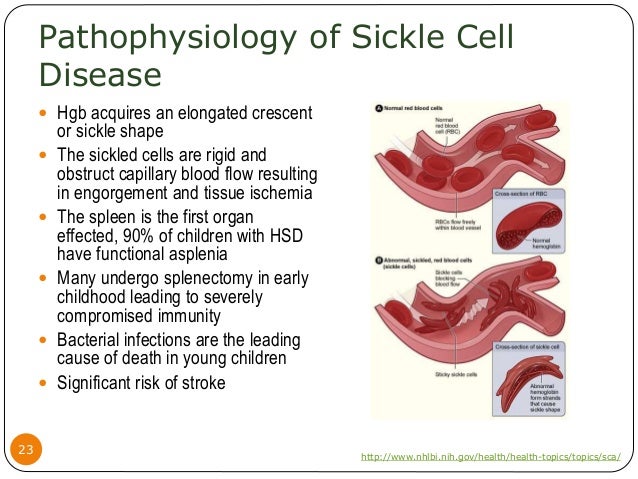
The disease is characterized by many of the symptoms of chronic anemia (fatigue, pale skin, and shortness of breath) as well as susceptibility to infection, jaundice and other eye.
Sickle cell anemia is a severe hemolytic anemia that results from inheritance of the sickle hemoglobin gene. They vary from person to person and change over time. People with sickle cell anemia have an increased risk of serious infection, and fever can be the first sign of an infection. Signs and symptoms of sickle cell anemia usually appear around 5 months of age.
Tags:
flow chart sickle cell anemia pathophysiology diagram
pathophysiology of sickle cell anemia pdf
sickle cell anemia pathophysiology flow chart
sickle cell anemia pathophysiology ppt